


天猫
How a Chinese game scholar connects ancient texts with modern play_我的网站

一 | South Korea has steadily built a reputation for creating some of the most inventive and spine-chilling horror films. If you are thinking of simple jump scares, you are in for a lot! Simply put, K-horror thrives on atmosphere, folklore, psychological complexity and a uniquely Korean blend of tragedy and terror. These films pull you in with stylish direction and layered storytelling. Interestingly, they leave you thinking about their implications long after you’ve locked all your doors and switched on every light in the house.If you’re ready for a guided tour through Korea’s most unforgettable nightmares, here are ten of the best Korean horror movies for you to watch with your lights on. In This Article 1. A Tale of Two Sisters (2003)2. The Wailing (2016)3. Train to Busan (2016)4. I Saw the Devil (2010)5. Gonjiam: Haunted Asylum (2018)6. Thirst (2009)7. The Host (2006)8. The Call (2020)9. Whispering Corridors (1998)10. The Piper (2015)1. A Tale of Two Sisters (2003) Kim Jee Woon’s gothic psychological horror remains a benchmark for modern Korean cinema. Loosely rooted in an old Joseon-era folktale, the story revolves around two sisters who return from a mental health facility only to encounter escalating tension with their cold and unpredictable stepmother. From its dreamlike cinematography to its suffocating atmosphere, the film invites viewers into a labyrinth of memory, trauma and hallucination. Instead of spelling things out, it asks you to piece together the truth. 2. The Wailing (2016) If A Tale of Two Sisters is a fairy-tale nightmare, The Wailing is a sprawling supernatural epic disguised as a crime drama. It is set in a quiet mountain village that is plagued by bizarre illnesses and gruesome murders. The film follows an overwhelmed police officer who becomes embroiled in a series of events involving shamans, demons and eerie strangers. Director Na Hong Jin blends spiritual mythology with real world dread. The Wailing isn’t just scary; it is unsettling in a way few films dare to be. 3. Train to Busan (2016) Zombie films may feel overdone, but Train to Busan revitalises the genre globally. It is set almost entirely aboard a high-speed train, as the story begins with a viral outbreak that transforms commuters into ravenous undead within minutes. What elevates the film isn’t just the tight, breathless action choreography but its emotional core. At its centre is a father trying to reconnect with his young daughter and their evolving bond anchors the chaos around them. The characters are well drawn, the social commentary is sharp, and the pacing is absolutely relentless. It is a perfect example of how Korean filmmakers turn genre films into human stories. 4. I Saw the Devil (2010) Not for the faint-hearted, as I Saw the Devil blurs the line between horror and thriller. A secret agent embarks on a mission of revenge after his fiancée is murdered by a sadistic serial killer. Now a cat-and-mouse chase begins that becomes a brutal story of vengeance. The film is horrifying because of the killer’s cruelty and the protagonist’s descent into moral corruption. It comes with slick cinematography and Kim Jee Woon manages to keep the audiences hooked with nerve-shredding tension. The violence is graphic and chilling, to say the least. 5. Gonjiam: Haunted Asylum (2018) This movie explores the lives of a group of young content creators. They visit an abandoned psychiatric hospital to livestream their investigation for views and sponsorship money. At first, it feels like a mischievous reality-TV stunt. It is complete with pranks planned to scare the audience. But once the group begins exploring deeper into the asylum, the pranks give way to very real and very terrifying phenomena. The film’s shaky-cam style makes each moment feel immersive and real. Also, its exploration of the internet culture adds a modern twist to the haunted-asylum trope. 6. Thirst (2009) Park Chan Wook’s Thirst is a vampire film unlike any other. The reasons being that it is sensual, tragic, darkly funny and unexpectedly philosophical. The story follows a devoted priest who becomes a vampire after volunteering for a medical experiment intended to save lives. The priest is suddenly torn between his religious convictions and his bloodthirsty new instincts. He begins an affair that spirals into guilt, violence and moral decay. As always, Chan Wook's visual flair elevates the film. Also, the movie does not rely on typical vampire cliches clichés. It uses the supernatural to examine human weakness and spiritual conflict. 7. The Host (2006) Though often labelled a monster movie, The Host is far more sophisticated than that simple description suggests. It is directed by the globally acclaimed Bong Joon Ho. But interestingly, this movie released before Parasite. It follows a dysfunctional but deeply loving family fighting to rescue their daughter from a mutated river creature that rises from Seoul’s Han River. The monster is frightening enough, but what sets the film apart is its blend of horror, political satire and heartfelt family drama. Bong uses the creature as a metaphor for Government failure, environmental negligence and societal indifference. It’s thrilling, funny, emotional and terrifying all at once. 8. The Call (2020) A more recent addition to the Korean horror canon, The Call combines time-travel elements with psychological horror. The premise centres on two women living decades apart but connected through a mysterious telephone line. It starts as an unusual friendship, but it quickly turns nightmarish when one of the women uses their link to manipulate the timeline. She gives way to her own violent impulses. The film escalates at a breakneck pace. It blends sci-fi, thriller and horror into a uniquely chilling ride. Its unpredictable twists and menacing energy keep viewers on edge until the final seconds. 9. Whispering Corridors (1998) A landmark in the revival of Korean horror during the late 1990s, Whispering Corridors is set in an elite all-girls school where mysterious deaths spark rumours of ghosts roaming the hallways. While it functions as a supernatural mystery, the film also critiques the pressures and abuses embedded within Korea’s academic system. Its success spawned a long-running anthology franchise, but the original remains the most impactful, thanks to its eerie atmosphere and emotionally charged storytelling. The school setting, with its empty classrooms and locked corridors, becomes a perfect stage for terror. 10. The Piper (2015) Inspired by the classic legend of the Pied Piper, this folk-horror gem is set in the aftermath of the Korean War. A wandering piper and his son arrive at a remote village plagued by a rat infestation. At first welcomed, he is soon betrayed by the superstitious villagers. It leads to one of the most chilling revenge arcs in Korean horror. It begins as a quiet and almost pastoral drama. Then it slowly transforms into a grotesque and poetic retribution. The film’s unsettling tone, creepy creature design and moral lessons make it a standout for fans of folklore-based horror.One thing is for sure, Korean horror doesn't simply aim to shock. It often reflects deep-rooted cultural anxieties about family expectations, social hierarchy, Government mistrust, colonial trauma, religious conflict and the wounds left by rapid modernisation. Ghosts in Korean cinema are rarely just monsters. They are symbols of unresolved guilt or injustice. Monsters represent societal failures. Revenge stories become meditations on morality. Even zombie films carry emotional weight.Stylistically, K-horror thrives on atmosphere. Directors take their time setting up tension, focusing on mood, character psychology and beautiful-yet-ominous visuals. The result is a mix of artful storytelling and gut-wrenching fear that resonates with global audiences.Also Read: Inspection Bungalow Review: A Quirky Horror Comedy That Fumbles Its Final Stretch。
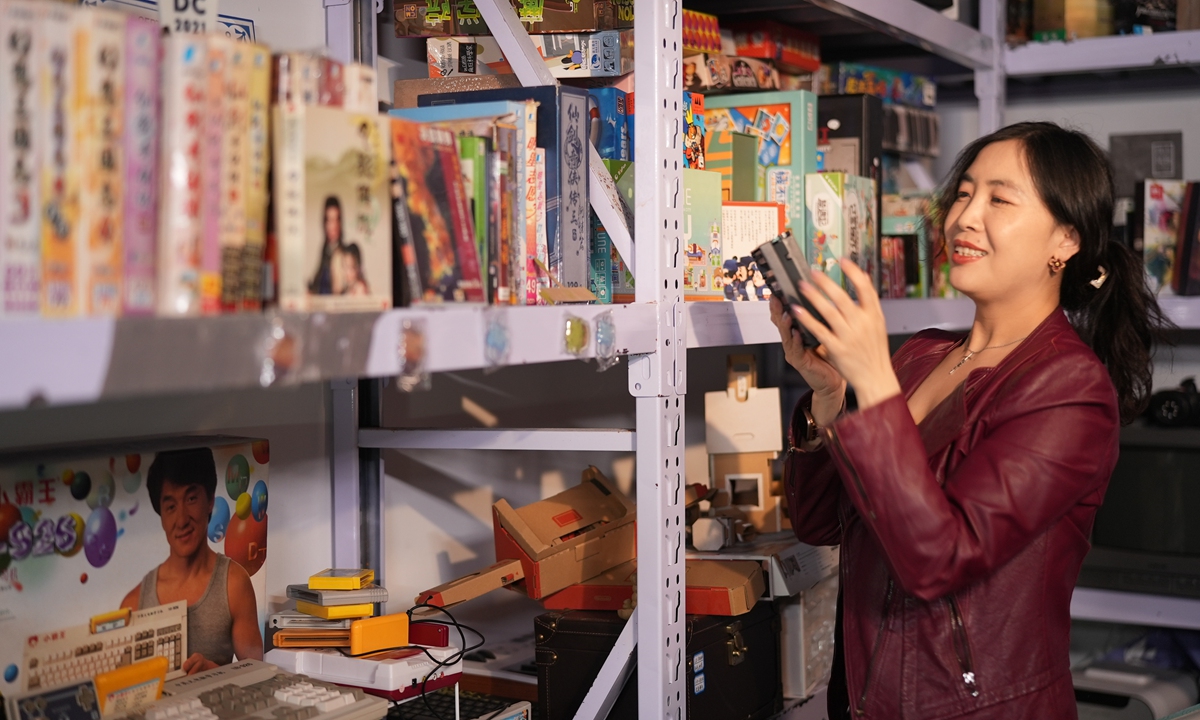
Inside Beijing's Homoludens Archive, shelves are filled with books, game consoles, game cartridges and other materials tracing the history of video games. For Liu Mengfei, the archive's director and chair of the academic committee of the Gamification Professional Committee, these collections preserve more than the evolution of games, they also capture the cultural memories of a generation.
A PhD in history from Tsinghua University, Liu has spent more than a decade studying the social impact of games, the role of games in history and digital humanities. Throughout her career, she has continued to explore the relationship between games and people: Why do humans create games? And how do games shape culture and society?
Books, meanwhile, have been an important gateway through which Liu has come to understand the world of games.
"The real value of a book lies not simply in what it tells you, but in whether it can change the way you understand the world and people," Liu told the Global Times.
Books meet games
In 2007, being an undergraduate history student, Liu wrote her thesis on the links between ancient Celtic religion and modern digital games.
To study original sources such as The Gallic War by Roman author Julius Caesar, she taught herself Latin. As her research extended into modern games, she also began reading the rulebooks of Dungeons & Dragons, a tabletop role-playing game.
"From historical texts to game rulebooks, these reading experiences seemed to belong to completely different worlds, but they gradually led me to realize that games are not simply entertainment products. They also contain history, culture and the relationships between people and society," she said.
Later, Homo Ludens, by Dutch historian Johan Huizinga, further transformed the way she understood games. The book gives a theory that humans are not only Homo sapiens, or "rational beings," but also Homo ludens, or "playing beings," and that games are deeply intertwined with human culture, from language and art to religious rituals and sports.
The book had a profound influence on her. It points out that the foundations of human society — language, civilization, religious rituals, sports and art, are all connected to play and games, because we are Homo ludens, "the playing human."
"The idea prompted me to view games from a broader perspective," Liu said. "Games are not an appendage outside human civilization, but are deeply connected to cultural creation and social life."
"It also showed me that games and game-based thinking could extend into broader fields, including education and technology," she added.
She later read other works on game studies, including Play Between Worlds: Exploring Online Game Culture, Half-Real and Rules of Play Game Design Fundamentals. Play Between Worlds, in particular, opened up another possibility for game studies at a time when discussions about "internet addiction" were prevalent in China.
"Games are not simply a form of entertainment that needs to be restricted or criticize;. they can also serve as important media for storytelling, cultural expression and exploring relationships," she said.
These reading experiences gradually shifted Liu's focus from simply asking "What are games?" to a deeper question: What can games bring to people?
Beyond time and technology
Periodically, Liu still returns to Homo Ludens in her free time, finding new insights from the book as society changes. In the age of artificial intelligence, she has revisited one of its fundamental questions: As AI becomes increasingly capable of handling repetitive tasks and surpasses humans in efficiency, what does it mean to be human?
"As AI takes over more monotonous and repetitive work, the time freed up should be devoted to creativity, experience and human relationships," she said. "The time we gain should actually be used to become better at 'playing humans.'"
For Liu, this also requires people to maintain their ability to think, imagine and reflect -- abilities that cannot be gained through simply receiving information. This has also prompted her to reconsider the meaning of reading.
In an era when AI can quickly summarize an entire book, Liu believes people still need to read the original works in full, because the value of reading lies in more than simply acquiring knowledge and conclusions.
"Reading a book is like a form of cultivation. You have to immerse yourself in it, patiently allow the author to take you on a journey, and find your own island along the way," she said.
For Liu, the value of reading is not limited to books on paper. As media evolve, so do the ways people encounter stories and understand culture. Some digital works are now becoming new vehicles for reading.
Chinese-developed games such as Genshin Impact contain hundreds of thousands, and even more than a million Chinese characters of text, while Black Myth: Wukong uses its "Journal" system to tell the stories of individual monsters through written entries.
"Digital games are carrying forward traditions inherited from literature and film, becoming new gateways, through which young people can enter the worlds of literature, history and traditional culture," she said.
"An important reason why Black Myth: Wukong has succeeded in communicating Chinese culture is that it does not simply insert traditional cultural symbols into a game. Instead, it draws on the original Journey to the West, contemporary works inspired by the classic, as well as the game's own rules and interactions, allowing players to develop a new understanding of traditional culture through their actions," she noted.
For Liu, the forms of reading may change, but the desire to understand the world and discover oneself will not. From books to digital worlds, what matters is not only what people read or play, but how they think, create and find meaning through these experiences.
。
Current article:http://9rxd.gamajionghuanmuniuzhuanguchu.cyou/news/20260826_26400.html
Published on:11:18:33
 公益微光汇成善行暖流!百家福彩爱心驿站启动“酷暑送伏茶” 活动
 爱仕特总部落户 钱塘“芯”版图再添硬核力量
 未来三年,Facebook将投资3亿美元帮助全球新闻机构。
 永兴股份:上半年归母净利润5.22亿元,同比增长13.24%
 喜刮“六尺巷”!河南福彩刮刮乐回馈活动来啦
 打好有准备之仗 全力应对暴雪寒潮天气
 洛杉矶大火恐成美最具破坏性自然灾害,新一轮强风或致火势扩大
 贵阳一购彩者喜中体彩大乐透一等奖一注
 市中院司法警察支队开展警务安全督导检查
 限量29台的神秘车型 兰博基尼Fenomeno将于8月圆石滩车展发布
 体验式消费需求释放 暑期消费市场活力涌动
 【全环境立德树人】警察爸爸“趣”课堂 安全携手“筑”成长——市北区第九实验幼儿园家长进课堂系列活动集锦(二)